

























We describe general information about the Italian healthcare system and the immigration of healthcare personnel to Italy in 2 parts. In the first part, general information about the structure of the Italian healthcare system is provided, and in the second part, the generalities of healthcare personnel immigration to Italy are mentioned.
Part 1: Italy's healthcare system | Among the top countries in the world
Italy is among the countries whose public health system not only guarantees universal access to medical services but also, with its remarkable quality and affordable costs, has managed to achieve a distinguished position among developed nations. With one of the highest average life expectancies in the world, this country has proven that its health policies are effectively serving public welfare.
The Italian health system, known as the Servizio Sanitario Nazionale (SSN), is based on the Universal Healthcare model which covers citizens and legally resident individuals with health services. This means that although the general principles and budget are determined by the central government, the practical implementation and management of health services are entrusted to local governments or Regions (Regioni). This structure has resulted in varying levels of access, quality of services, and even waiting times for treatment in different regions, making it particularly important to examine the conditions of the province, especially for immigrants and residency applicants.
Global standing of the Italian healthcare system
According to reports from the World Health Organization (WHO) and international sources such as Bloomberg and The Lancet, the Italian health system is consistently ranked among the best in the world. Factors such as universal access, the quality of medical education, hospital infrastructure, and high life expectancy are due to the high quality of this system. The average life expectancy in Italy is over 83 years, which is considered one of the highest in the world — an indicator of the efficiency of the health system and healthy lifestyle in this country.
Health insurance in Italy
All legally resident individuals in Italy are required to register with the public health insurance system.
- Tessera Sanitaria (Health Card): Each person receives this card after registering with the SSN, which enables their access to healthcare services.
- Public insurance covers many services such as general practitioner visits, emergencies, hospitalization, vaccinations, and even some medications.
- Private insurance can also be used alongside public insurance, especially for faster services, specific doctors, or private rooms in hospitals.
Pharmaceutical services and pharmacies in Italy
Pharmacies (Farmacia) in Italy play a key role in public health. Many of them also offer services such as blood pressure measurement, blood sugar testing, vaccinations, and pharmaceutical consultation. Medications are divided into prescription and over-the-counter categories, and the cost of essential medicines is usually partially covered by public insurance. Pharmacies are generally accessible in all neighborhoods, and some 24-hour pharmacies (Farmacia di turno) are also active in urban areas.
Medical and dental structure and services
- General Practitioner (Medico di base): Each person must choose a family doctor who is the first point of contact for all medical matters.
- Specialist Doctors: They can be accessed through a referral from a general practitioner or directly (with private insurance).
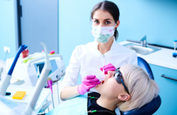
- Dentistry: It is more common in the private sector and is usually not covered by public insurance except in specific cases (children, emergencies).
- Hospitals: Include public and private hospitals, with access to emergency services, surgery, hospitalization, and intensive care.
- Paramedical and related professions: Paramedical professions in Italy include nursing, physiotherapy, optometry, midwifery, laboratory technician, occupational therapy, etc. Each of these professions requires university education and obtaining a professional license from the relevant authorities.
Professional licenses and income of healthcare personnel
All healthcare personnel (doctors, dentists, nurses, pharmacists, etc.) need to obtain a license from official professional bodies such as FNOMCeO (the Italian Federation of Orders of Surgeons and Dentists) to practice in Italy. Approximate income ranges are as follows:
75,000 to 150,000 euros per year
100,000 to 300,000 euros per year
100,000 euros and above depending on experience and practice location
These figures vary depending on the region, experience, type of employment, and whether the workplace is public or private.
Medical sciences education and healthcare personnel in Italy
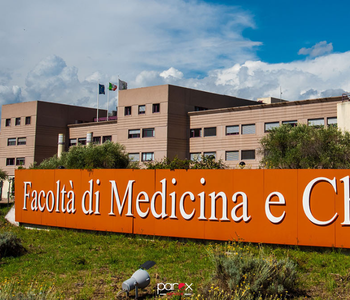
Italy has internationally renowned universities in the fields of medical sciences, dentistry, pharmacy, nursing, and other paramedical disciplines. Education in these areas is highly structured and aligned with European standards.
Some prominent medical universities in Italy
Università di Bologna
Università degli Studi di Milano
Sapienza Università di Roma
Humanitas University
Università di Padova
Università di Pavia
Università di Parma

Fields and study levels in the medical group
General Medicine
(6 years)
Dentistry
(6 years)
Pharmacy
(5 years)
Nursing
(3-year Bachelor’s degree + higher levels)
Medical specialties
(through intense competition in specialized entrance exams)
PhD
In the fields of biomedical sciences
Teaching at some universities is also conducted in English, especially in international medicine and surgery programs.
Paramedical professions and practice conditions
Paramedical fields such as nursing, occupational therapy, optometry, speech therapy, laboratory technicians, oral hygiene, etc., all have a defined structure in Italy and require university education and obtaining an official license to practice.
Practicing in these professions is conditional upon registration with regional professional bodies that are responsible for supervising the qualifications and continued practice of professionals in these fields.
Part 2: Immigration of healthcare personnel to Italy
Italy, with its reputable and highly advanced healthcare system, which has one of the most comprehensive public health systems in Europe, has been an attractive destination for health sector professionals for years. The continuous demand for skilled healthcare personnel, especially doctors, nurses, dentists, and paramedics, has led this country to keep its doors more open than ever to foreign specialized professionals.
For Extra UE healthcare personnel, immigrating to Italy is not just a geographical relocation; it is entry into a standard work environment, with job stability, accompanied by high social respect. However, this path requires careful preparation and familiarity with the legal and professional requirements of the destination country.
The first and most important step is the evaluation and equivalency of academic and professional qualifications (Riconoscimento dei titoli esteri) at the Italian Ministry of Health. Without this approval, official activity in the healthcare field will be impossible. Furthermore, proficiency in the Italian language (at least at level B2) is an absolute necessity for entering clinical environments and communicating with patients.
Advantages of healthcare personnel immigration to Italy
Immigration to Italy for doctors, nurses, and other healthcare personnel provides the opportunity to enter one of the most advanced health systems in Europe. Below, we review the most important advantages of this professional path:
- Advanced and high-quality healthcare system: Italy has one of the best healthcare systems in the world; with modern infrastructure, up-to-date medical equipment, and international standards for patient care.
- Equal access for everyone: In the Italian public health system, all individuals (including legal immigrants) have access to quality healthcare services. This means you will be working in a humane and fair system.
- Diverse job opportunities: With a shortage of specialized personnel in many healthcare fields, the opportunity for employment in various medical and nursing disciplines in Italy is very high.
- Living in a beautiful and cultural country: In addition to career benefits, living in Italy means enjoying nature, history, art, food, and a European lifestyle alongside social security.
- Job stability and a bright future: The healthcare sector is one of the stable professions in Italy. With valid qualifications and legal entry, you can enjoy job security, a formal contract, and the possibility of long-term residency.
- Possibility of obtaining long-term residency and family life: With work immigration in the healthcare sector, in addition to a stable job, you and your family have the possibility of obtaining work residency, renewing it, and ultimately obtaining permanent residence or Italian citizenship. Furthermore, your spouse and children can also benefit from free healthcare services, public education, and European living conditions.
Free consultation: Our specialists will guide you through the visa application stages and answer your questions free of charge.
What healthcare personnel are needed in Italy?
Italy, due to the increasing average age of the population, shortage of specialized personnel, and widespread retirements in the health sector, has strongly turned to attracting healthcare workers from abroad in recent years. Consequently, a significant opportunity for the employment of Extra UE healthcare personnel exists. According to reports, the country currently faces a shortage of approximately 30,000 doctors throughout its health system, a deficit that will increase each year. Below, we introduce the most important groups of healthcare personnel needed in Italy:
General practitioners and specialists
- General practitioners (Medico di base)
- Specialists in internal medicine, cardiology, pediatrics, gynecology, orthopedics, neurology, emergency medicine, anesthesiology, radiology and intensive care, general and specialist surgeons, urologists, pathologists, otorhinolaryngology.
- Geriatricians (Geriatria) are in high demand due to the aging population.
Many rural or sparsely populated areas in Italy even offer financial or residency incentives to attract general practitioners and family doctors.
Paramedics and complementary healthcare staff
- Operating room technicians (Tecnico di Sala Operatoria)
- Laboratory technicians (Tecnico di Laboratorio Biomedico)
- Radiology experts (Tecnico di Radiologia)
- Physiotherapists (Fisioterapisti)
- Occupational therapists (Terapisti Occupazionali)
- Clinical psychologists (Psicologi clinici)
- Pharmacists (Farmacisti)
The demand for biomedical laboratory technicians, radiology technicians, physiotherapists, occupational therapists, and other similar professions is significantly increasing. For some fields, such as radiology technicians, there is still a sufficient number of graduates, but in other areas, a serious need is felt.
Many of these professions are on the list of (Regulated Professions) and require going through formal degree verification procedures.
Dentists (Dentisti)
- General dentists and specialists
- Orthodontists, oral and maxillofacial surgeons
Practicing as a dentist requires precise qualification equivalency and membership in the medical association, but its job market is very dynamic in urban areas.
Nurses (Infermieri)
- General nurses
- Intensive care and ICU nurses
- Geriatric and home care nurses
- Mental health nurses
Nursing has one of the highest rates of personnel shortage in Italy, and the process of nursing degree equivalency for Iranians is clear and feasible.
Elderly caregivers and nurses' aides (Assistenti Sanitari / OSS)
- Home caregivers for the elderly (Badanti)
- Support staff in nursing homes and care centers
These jobs are in high demand and, for applicants who do not have a formal nursing degree, they are considered a suitable starting point for faster entry into the Italian healthcare job market.
Main causes of the widespread need for healthcare personnel:
- Aging population: With the trend of population aging—by 2050, half of the population will be over 65 years old—the need for long-term care increases.
- Decrease in applicants for studying healthcare fields: The desire to enter these professions has decreased; especially in nursing, the ratio of applicants to available places has become very low.
- Professional exodus and mass retirements: Many nurses and doctors are nearing retirement.
- Specialization gap: Sectors such as emergency, radiotherapy, and pathology face particular shortages.
Job opportunities in the operating room in Italy
Operating rooms in the Italian healthcare system are a symbol of progress, order, and technology. With the increasing shortage of specialized personnel in surgical and operating room departments, this country has become a reliable destination for work immigration of technicians, operating room nurses, and professional instrumentists.
Job opportunities in the operating room in Italy
Advanced and up-to-date infrastructure
Italian operating rooms are equipped with technologies such as:
- Robotic surgical systems like (Da Vinci Surgical System)
- Real-time digital patient monitoring
- Intraoperative imaging equipment
- Ventilation systems with high-class sterilization standards
Strict infection control protocols
Each operating room is designed and managed based on the latest European Union protocols
- Room air control with HEPA filters
- Specialized clothing and coverings for the surgical team
- Central sterilization with automated technology
Multidisciplinary and trained surgical teams
In Italian operating rooms, technicians, nurses, and surgeons work together cohesively. In particular, the role of operating room technicians in preparing instruments, providing support during surgery, and post-operative care is very key.
Job opportunities for operating room staff in Italy
Public Hospitals (Pubblico)
- Access to ongoing training
- High job security and long-term contracts
- Regular working hours and legal overtime
Private Centers (Privato)
- Higher salaries, especially in large cities like Milan, Rome, and Turin
- More advanced equipment and more specialized environments
- Greater flexibility in contracts and performance bonuses
Specialized Surgical Clinics
- Focus on specific surgeries (cosmetic, orthopedic, neurosurgery)
- Need for highly skilled personnel in instrument science and surgical technology
Why is Italy a suitable destination for operating room specialists?
- Shortage of specialized personnel in medical centers, especially in medium-sized cities and the south of the country
- Safe and structured healthcare system with opportunities for personal development
- Easier integration into multinational medical teams in large hospitals
Summary: Opportunities for Iranian healthcare personnel
Most provinces and hospitals in Italy are in search of qualified doctors, nurses, paramedics, and healthcare assistants. This shortage of human resources provides a very good opportunity for Iranian healthcare personnel to enter the official job market of this country through degree equivalency, Italian language training, and obtaining a work visa.
- General practitioners and specialists: Especially in high-demand specialties.
- Nurses: Clearly among the priority professions for attracting foreigners.
- Technicians and paramedics: There is a growing need in fields such as radiology, laboratory, and rehabilitation.
Italy now needs skilled healthcare personnel more than ever; if you carefully follow the process of degree equivalency, language learning, and administrative procedures, this can be an excellent starting point for your career migration.
PAREX services for obtaining Italian residency for healthcare personnel.
- Providing an official job offer from an Italian hospital or medical center
- Equivalency of your qualifications at the Italian Ministry of Health
- Registering you with the Italian Order of Surgeons and Dentists
- Continuous Italian language training for you and your family by PAREX
- Assistance with preparing, translating, and legalizing all your documents
- The process of obtaining permanent residence and Italian citizenship for PAREX clients
- Enrolling children in Italian nurseries and schools
- Consultation and support for renting or purchasing a car, home, and workplace